



[Cloud Solutions Spotlight] Don't Let Hidden Costs Sink Your Business—Why Cloud ERP Is a Must-Have for Digital Transformation?
2025-12-24
In today's era of rapid business growth, finance teams are often overwhelmed by cumbersome manual processes, fragmented systems, and outdated data. Have you noticed:
Month-end closings consistently dragging on for days?
Cross-regional business data failing to sync in real time?
Information silos between systems causing inventory-order discrepancies?
These issues represent not just efficiency losses, but hidden costs hindering business growth. Many companies still rely on traditional on-premise ERP or small accounting software, unaware that failing to upgrade itself incurs significant expenses.
I. Three Tangible Returns from Cloud ERP
Dramatically Enhanced Labor Efficiency
Cloud ERP automates repetitive tasks like invoicing, purchase orders, and bank reconciliation, significantly reducing manual labor time. For instance, an Australian company saved its finance team 4 hours daily after adopting NetSuite. As the business scales, these time savings translate into substantial payroll cost reductions.
Agile and Precise Decision Support
Cloud ERP offers customizable real-time dashboards, enabling management to instantly access multidimensional data on finance, inventory, sales, and more. This not only accelerates reporting but also empowers businesses to respond faster to market shifts, seize opportunities, and mitigate risks.
Support for Rapid Business Expansion and Globalization
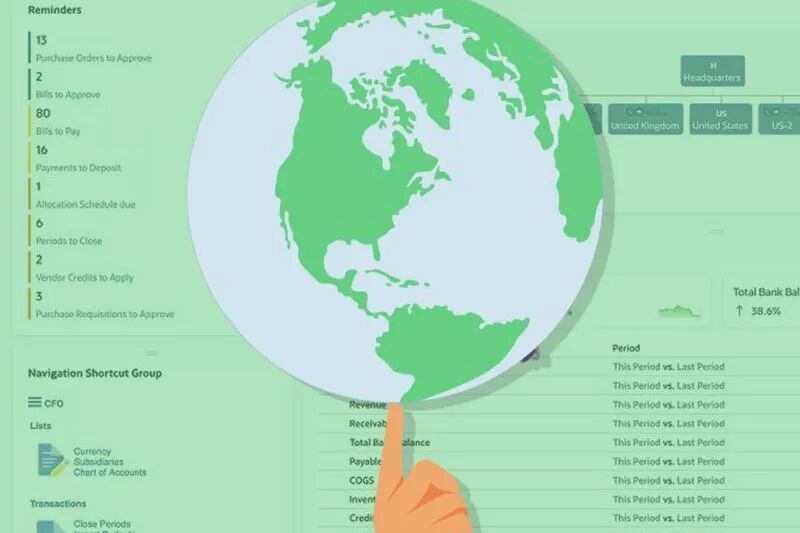
Whether launching new product lines or entering overseas markets, cloud ERP delivers comprehensive business insights and compliance support. For instance, after deploying NetSuite OneWorld, a publicly listed furniture company achieved automated global financial consolidation and multi-currency conversion, transforming financial reporting from “month-end visibility” to “real-time access.”
II. The Hidden Costs of Legacy Systems You May Be Paying
System Development Stagnation
Most software vendors have shifted their R&D focus to cloud products. Companies stuck with on-premises systems will miss out on new features and security updates, gradually falling behind industry standards.
Hindering Corporate Culture and Talent Attraction
Employees facing clunky, inefficient systems daily suffer diminished work experience and morale. Conversely, cutting-edge tools attract and retain top talent seeking efficiency and innovation.
High Security Protection Costs
On-premises systems require businesses to bear multiple expenses—hardware, backups, cybersecurity—often with protection capabilities inferior to cloud providers' professional security frameworks. Cloud ERP solutions like NetSuite undergo annual international security certifications (e.g., SOC 2, ISO 27001), delivering “enterprise-grade” protection.
III. How to Evaluate the “Cost of Transformation”?
Migrating to cloud ERP represents not just a technical upgrade but a strategic investment. Businesses can conduct a comprehensive assessment across two dimensions:
Tangible Benefits:
Reduced closing cycle time
Decreased reliance on manual labor
Lower IT infrastructure expenditures
Intangible Benefits:
Enhanced supply chain and cash flow management
Enhanced data transparency and decision-making quality
Establishment of a unified, secure, and scalable digital foundation
Cloud ERP is not an “option” but an “essential requirement” for sustained business growth and navigating complex market environments. It transcends being merely a system; it signals to customers, employees, and the market that the enterprise is prepared to embrace the future with greater intelligence and cohesion.
-
2026/09/24
[Product Updates] An Analysis of the Oracle NetSuite SuiteScript 2.1 Migration Path: From Inventory to Migration – Preparing for 2028.2
-
2026/09/10
[New Client Update | Freemen Nutra] Oracle NetSuite × Hitpoint Cloud empowers a life sciences company to upgrade its digital management
-
2026/08/27
[Cloud Solutions Spotlight]As Chinese enterprises expand overseas, this marks the ‘year of establishing a foothold’;why has AI-native ERP become a must-have?
-
2026/08/21
[Cloud Solutions Spotlight] Worried about falling into pitfalls when choosing a cloud ERP? Use these 5 criteria to distinguish between ‘true cloud’ and ‘pseudo-cloud’