



SaaS and Modern Service Industries
Modern service industries including SaaS, platform-based services, cross-border logistics and overseas warehouses, travel technology, and internet advertising.
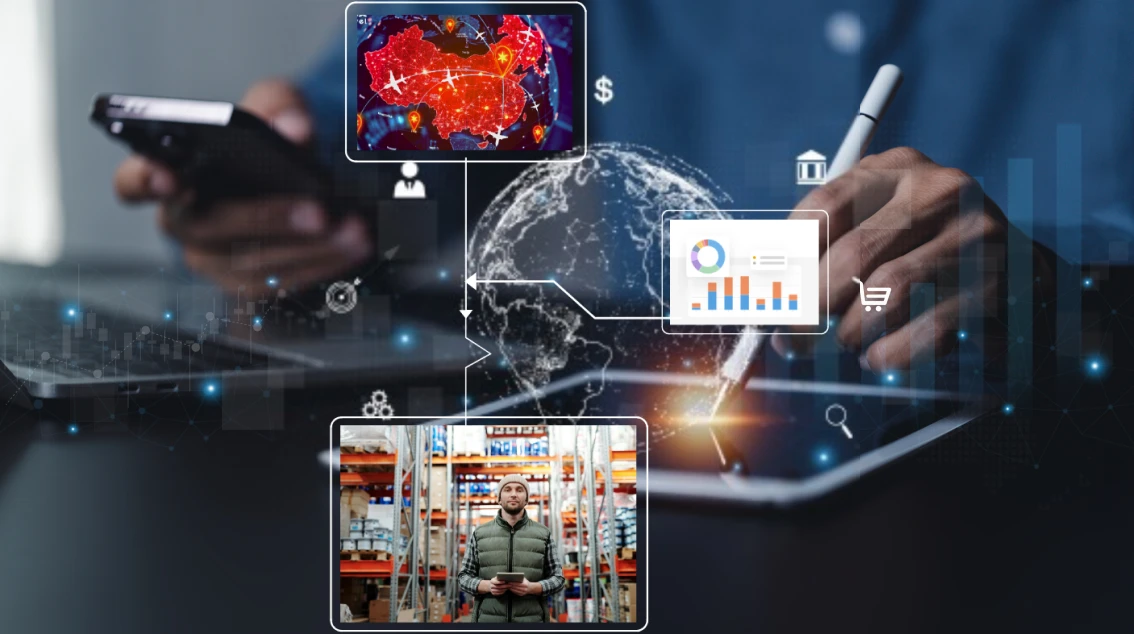
Trends
1. The trend of parallel substitution for similar international brands is obvious, with the core business maintaining strong momentum and value-added services developing rapidly.
2. Better understanding of Chinese sellers and Chinese business circles, with higher service quality and lower costs.
3. Vigorously expanding markets in Chinese mainland, Hong Kong, Taiwan, and Southeast Asia, and reversely entering the European and American markets.
4. Accompanying Chinese businesses going global, providing software, hardware, warehousing, logistics and other services.

Key Challenges
There is no sound master data management center or integrated business-and-finance master data. The middle office and business back office only consider the business attributes of master data such as products and customers, while the finance department focuses more on the financial attributes of master data, making it difficult to understand and communicate with the middle office and business departments.


-

Separation of business and finance
The business middle office/product back office is not connected with the financial system. There are no integrated business-to-finance processes for accounts receivable/accounts payable and intercompany transactions. The connection between the middle and back offices does not focus on the integration of business and finance.
-

Lack of international group financial software
When domestically developed products are launched into the international market, overseas subsidiaries need to be established. Domestic financial software can hardly meet the requirements of global fiscal and tax compliance and rapid business expansion.
-

Lack of a sound business middle office
Core business management relies on the product back office, and each business line operates independently.

Solutions
1. Integration between the business middle and back offices with NetSuite, enabling real-time synchronization of master data including customer and supplier data as well as exchange rates; timely synchronization of documents such as sales orders, purchase orders, invoices, bills, reconciliation results, actual usage and expenses.
2. Integrated business and finance master data design: balancing the business management needs of the business middle and back offices with the accounting and statistical analysis requirements of the back-office financial system, expanding the types of middle-office business documents and financial attribute fields.
3. Closed-loop processes for multi-format accounts receivable, accounts payable and reconciliation write-off.
4. Automated revenue recognition for SaaS services, and management of key indicators including ARR, MRR, LTV and CAC.
5. Configurable rules and automated processing workflows for personalized intercompany transactions.
6. Automated financial processes and personalized financial analysis reports.
Related Cases
-


HOSE
Helping HOSE to realise the integration of finance and middle and back office operations and finance, and to implement the best practices in the SaaS field.
Learn More

-

AfterShip
Helping Aftership land best practices for cross-border e-commerce related SaaS services
Learn More
-

ShopeX
Helped Merchant ShopeX to complete multi-tier system replacement and re-engineer the main business finance process.
Learn More
-

PingCAP
Helping PingCAP to reconstruct the middle and back office business integration and revenue recognition process for five major online/offline business models.
Learn More
-

DidaTravel
Helping RoadTrip to realise rapid global expansion of multiple business lines in travel technology, integration and automation of business and finance.
Learn More
-

Western Post
Helped Westpost Smart Warehouse to complete the establishment of the group's global financial system and the seamless collaboration with the business centre.
Learn More
-

ADNUR
Assisted ADNUR in restructuring three major business processes to achieve systematic, standardised and international management.
Learn More
Latest News
-

 2026/09/24
[Product Updates] An Analysis of the Oracle NetSuite SuiteScript 2.1 Migration Path: From Inventory to Migration – Preparing for 2028.2
Learn More
-
 2026/09/10
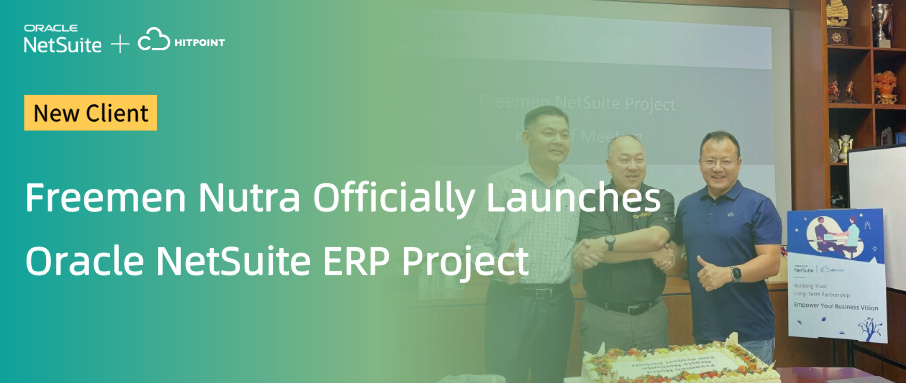
[New Client Update | Freemen Nutra] Oracle NetSuite × Hitpoint Cloud empowers a life sciences company to upgrade its digital management
Learn More
-
 2026/08/27
[Cloud Solutions Spotlight]As Chinese enterprises expand overseas, this marks the ‘year of establishing a foothold’;why has AI-native ERP become a must-have?
Learn More