


Chain Restaurant
Bringing In and Going Global: adopting global chain-management best practices, enabling localized innovation, and driving the next wave of international expansion for Chinese catering and tea brands.
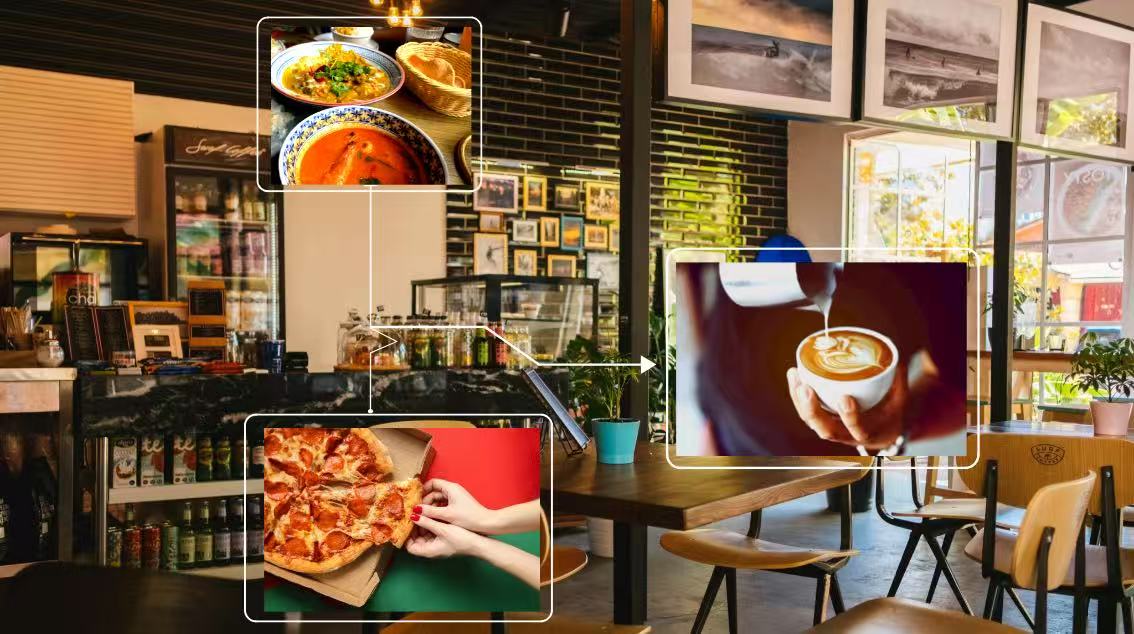
Trends
1. Standardization and Intensive Operation: Leading Chinese catering and tea drink brands are accelerating standardized management and refined operation, covering top-level design of global finance, group-level business and financial control, supply chain MRP, refined cost accounting for production and processing, financial process automation, etc.;
2. Accelerated Upgrade of Information Systems: Surge in demand for information upgrading and process automation, including the transition from domestic ERP to global SaaS ERP, integration of domestic supply chain systems, and expansion of global supply chain systems;
3. Irresistible Globalization Trend: Intense domestic competition, with generally higher profits from overseas stores than domestic ones; services are provided not only to local Chinese communities but also to the local mainstream population;
4. Global scalability of information systems and empowerment of local stores and franchisees.

Key Challenges
Today's chain restaurant enterprises should focus on the globally integrated layout, and the efficient collaboration among stores, central kitchens, and global supply chains.


-

Acceleration of the whole industry's expansion overseas
Global Deployment of Integrated Catering & Beverage Solutions;
-

Global Supply Chain Center
Global supply chain planning, store-level cost per thousand orders, central kitchen MRP;
-

Efficient Collaboration of Subsystems
Store POS / Middle Platform, supply chain SRM and WMS, global payment channels;

Solutions
Hitpoint has long-standing and profound practical experience in the chain catering industry. Its complete industry solutions include top-level design of business models, full lifecycle management of stores and franchisees, in-depth global supply chain collaboration, integration and collaboration of professional subsystems, as well as personalized solutions for the catering industry (cost-per-thousand orders model, sales BOM, etc.).
1. Top-level design for multiple business models of chain catering (direct operation, franchise, joint operation);
2. Full lifecycle management of stores:
- Store planning and development: systematic management of the entire process from site selection, decoration to opening;
- Daily store operation: integrated purchase, sales and inventory management, sales forecasting and replenishment based on the cost-per-thousand orders model;
3. Full lifecycle management of franchisees:
Franchise contracts and electronic signatures, recognition of franchise fee revenue and revenue sharing schemes, order systems for franchise stores with local language support, online payment and store tax declaration support, and accounts receivable management for stores (decoration fees, management fees, penalties, etc.);
4. Global catering POS solutions and collaboration, as well as global revenue-splitting solutions;
5. Global supply chain planning: global supply chain center model, global sourcing and global sales, global supply chain planning model, store ordering model based on cost-per-thousand orders, and MRP models for local central kitchens;
6. Global supply chain execution: product R&D, personalized catering master data, procurement agreements, global replenishment, and collaboration with SRM and WMS;
7. Central kitchen: production process management, MES integration, and refined production cost accounting;
8. Quality management: batch traceability and validity period management of catering raw materials, semi-finished products and finished products;
9. Group financial control: personalized inter-company transfers and returns, monthly summary of affiliated transaction data, and automated financial processing;
10. Global fiscal and tax compliance: local adaptation of fiscal and tax regulations and electronic invoices in various regions.
Related Cases
-


Yonghe King
Helping the Jollibee Group to have transparent control over Yonghe King shops in China and Asia Pacific
Learn More

-
Domino’s Pizza
Helping Domino’s Pizza China (DPC Dash) to efficiently operate 1000+ shops and central kitchens in China
Learn More
-

Blue Bottle Coffee
Helping Blue Bottle Coffee to realise refined management and integrated online/offline operation of domestic quality shops, integrated management of roasting factories and third-party warehouses
Learn More
-
Thai Town
Realisation of Thai Town's multi-subsidiary, multi-brand, integrated operation of online and offline shops and central kitchen factory
Learn More
Latest News
-

 2026/09/24
[Product Updates] An Analysis of the Oracle NetSuite SuiteScript 2.1 Migration Path: From Inventory to Migration – Preparing for 2028.2
Learn More
-
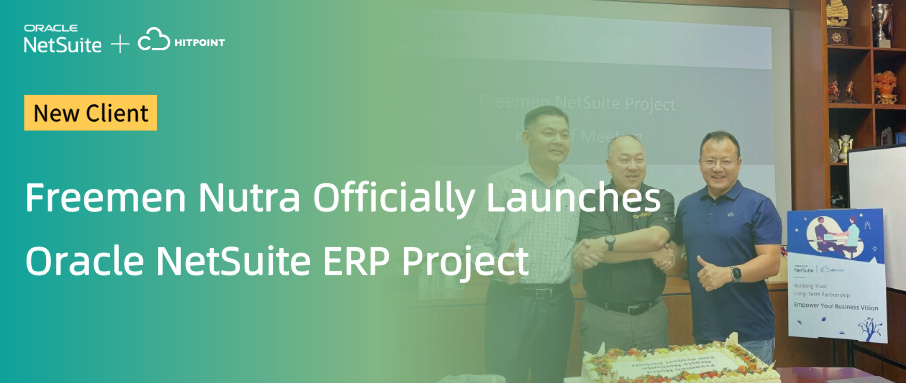 2026/09/10
[New Client Update | Freemen Nutra] Oracle NetSuite × Hitpoint Cloud empowers a life sciences company to upgrade its digital management
Learn More
-
 2026/08/27
[Cloud Solutions Spotlight]As Chinese enterprises expand overseas, this marks the ‘year of establishing a foothold’;why has AI-native ERP become a must-have?
Learn More