


Photovoltaic New Energy
Integrate the full PV value chain—from upstream wafers to midstream cells/modules and downstream power plants and energy storage.

Trends
1. Power Demand vs. Economic Development (GDP): With the growing penetration of industrial automation, unmanned operation and intelligentization, the competitive advantages of countries and enterprises will be closely linked to power generation capacity and electricity costs.
2. Energy "Impossible Trinity": Low cost, environmental friendliness, and safety & stability cannot be achieved simultaneously. New photovoltaic energy will serve as a supplement to stable energy sources such as thermal power.
3. Global carbon neutrality is an irresistible trend: Cost-effective and efficient new photovoltaic energy will gradually become a primary energy source.

Key Challenges
Trade barriers are rising rapidly in major global PV consumption markets, and are gradually spreading from finished modules to semi-finished cells and upstream raw materials such as silicon wafers.


-

High trade barriers
The United States for China's photovoltaic enterprises to promulgate a number of restrictions;
-

Restrictions are spreading
Restrictions have expanded from finished modules to semi-finished cells and upstream raw materials such as silicon wafers in the supply chain.
-

Coexistence of Assembly Manufacturing and Process Manufacturing

Solutions
Hitpoint has reshaped the overall solution for the photovoltaic industry based on the NetSuite platform.
1. Globalized trade and production architecture for the photovoltaic industry, enabling rapid adjustment of the global capacity layout in response to EU and US restrictive measures.
2. Photovoltaic industry brain: global supply chain planning and management.
3. Customized master data for the photovoltaic industry, including parent-child products for modules and cells, silicon wafer processes and procedures, etc.
4. Wafer conversion in the photovoltaic industry and customized power allocation management for sales.
5. Planning work orders for parent products and warehousing of sub-products in module and cell assembly production, as well as MES integration for module production.
6. Customized management of silicon wafer process manufacturing, production batching process management and MES integration.
7. Full lifecycle management of photovoltaic power stations: construction, operation and maintenance, daily meter reading and electricity sales (peak, flat, valley electricity), and weather data integration; management of national subsidies, provincial subsidies and local incentives; management of independent subsidiaries corresponding to each power station; bundled procurement and sale of power stations.
8. The rise of energy storage equipment (various large-capacity outdoor power banks) and residential photovoltaic solutions: emerging fields such as residential smart energy storage, charging piles and heat pumps.
Related Cases
-

Elite Solar
Helping Elite Solar to realise global production capacity layout and integrated multi-industry operation in the PV vertical field
Learn More

-
Xiehang Energy
Helping Xiehang Energy move from Turkish plant to global capacity, global fiscal compliance
Learn More
-
SEG Solar
Helping SEG Solar to realise global dual-headquarter operations and global production capacity synergies
Learn More
-

ASRE
Helping ASRE Realise Full Life Cycle Management of Photovoltaic Power Plants
Learn More
Latest News
-

 2026/09/24
[Product Updates] An Analysis of the Oracle NetSuite SuiteScript 2.1 Migration Path: From Inventory to Migration – Preparing for 2028.2
Learn More
-
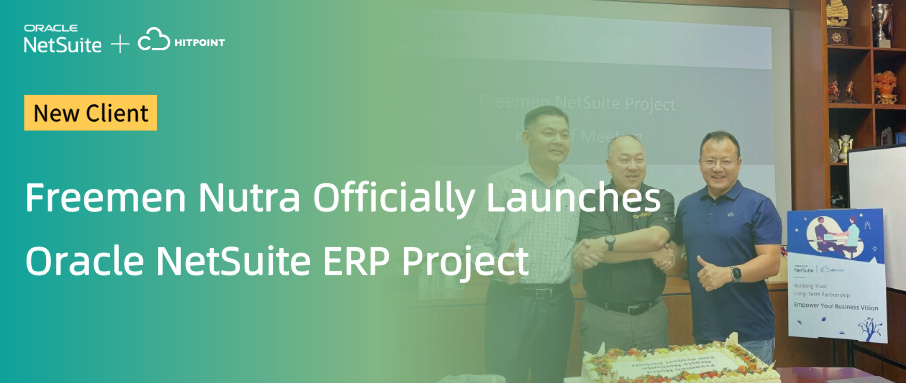 2026/09/10
[New Client Update | Freemen Nutra] Oracle NetSuite × Hitpoint Cloud empowers a life sciences company to upgrade its digital management
Learn More
-
 2026/08/27
[Cloud Solutions Spotlight]As Chinese enterprises expand overseas, this marks the ‘year of establishing a foothold’;why has AI-native ERP become a must-have?
Learn More