




[Cloud Solutions Spotlight] How AI Agents Are Reshaping the Future of Photovoltaic Manufacturing
2026-08-12
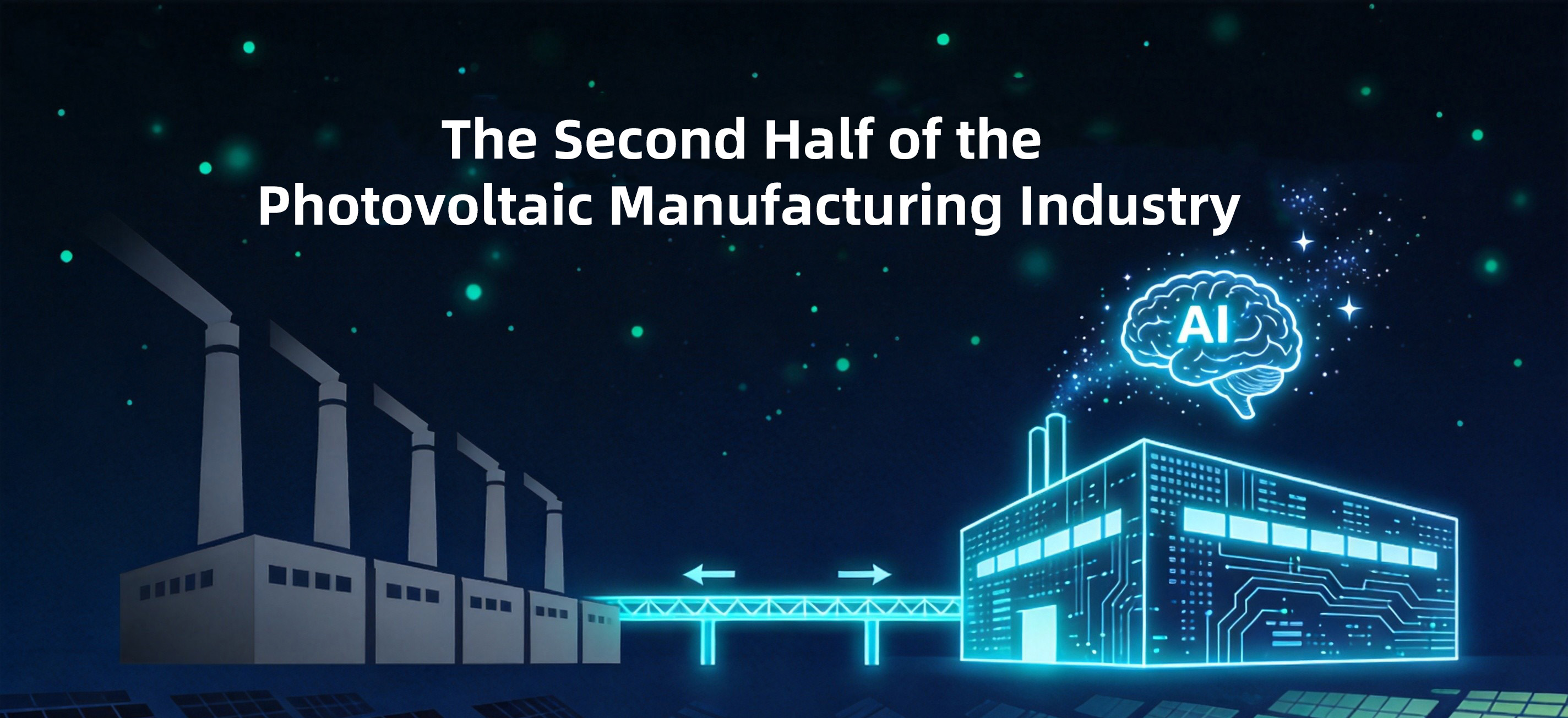
The photovoltaic industry is undergoing a profound paradigm shift.
Over the past decade, the dominant theme in the industry has been ‘expansion’—expanding production capacity, scale and market reach. Whoever could be the first to ramp up production capacity and drive down costs would emerge victorious. Today, however, this logic is failing. With industry-wide production capacity exceeding 500 GW, module prices having fallen from 2 yuan/W to below 1 yuan/W, and ‘internal competition’ becoming the norm, the era of relying solely on scale growth has come to an end.
The next battleground in PV manufacturing lies not in ‘whether one has production capacity’, but in ‘whether one can reduce the cost of each module by another fen, increase the yield rate by another percentage point, or shorten the delivery cycle by another day’.
Competing on efficiency, precision and systemic capabilities—these are the rules for survival in the second half of the solar industry’s journey. And AI is becoming the core engine of this efficiency revolution.
I. From ‘AI Quality Inspection’ to ‘AI Agent’: The Three-Stage Leap Towards Intelligence in Solar Manufacturing
If we were to categorise the application of AI in the solar industry into stages, it could broadly be divided into three tiers.
First Tier: AI Quality Inspection Tools — ‘Visible’
This is currently the most mature and widely applied AI scenario.
From wafers to cells and on to modules, micro-cracks, hidden cracks, grid line misalignment, bubbles, colour variations and other defects on the production line—defects that are difficult for the human eye to detect—are being identified one by one by AI vision inspection systems. Inspection equipment manufacturers, such as Optech, have already achieved end-to-end AI quality control—from the arrival of raw and auxiliary materials at the factory to the dispatch of finished products—covering more than ten specific inspection scenarios, with detection accuracy far exceeding that of manual spot checks.
However, at its core, this layer represents a single-point tool—it solves the problem of ‘what can be seen’, but does not answer the questions of ‘why’ or ‘how to proceed’. Quality inspection data resides in a standalone system, separated by a data wall from upstream material traceability, midstream production scheduling and downstream cost accounting.
The Second Layer: The AI Manufacturing Brain — ‘Thinking It Through’
Leading enterprises are already moving towards the second layer.
Tongwei Solar’s independently developed “i-Light Trace” system was recently selected as an “AI Application Star” by the World Economic Forum, making it the first company in the global photovoltaic cell manufacturing sector to receive this honour. This system does more than just perform inspections; it uses AI algorithms to conduct in-depth analysis of data across the entire production chain: on the one hand, it pinpoints root causes through reverse traceability of anomalies; on the other, it provides proactive early warnings through forward-looking predictions based on production line fluctuations. Even more interestingly, the system is equipped with a large-scale model agent that captures the tacit expertise of senior engineers and transforms it into a dynamic knowledge base, supporting one-click queries across multiple data sources and intelligent question-and-answer capabilities.
Trina Solar’s subsidiary, Trina Computing, has partnered with Xunce Technology to co-develop a large-scale model specialised in the energy sector, whilst Trina Fuji has launched two major AI models, ‘Tianying’ and ‘Tianyi’, aimed at smart energy management and electricity trading respectively—the role of AI is evolving from that of a ‘quality inspector’ to that of an ‘analyst’ and ‘decision-making advisor’.
The essence of this layer lies in the data closed loop—progressing from ‘observing’ to ‘analysing’ and finally to ‘providing recommendations’.
Third Layer: AI Agent-led Holistic Coordination – “Getting Things Done”
However, the true revolution takes place at the third layer.
When AI is no longer merely a tool or a ‘brain’ on the production line, but instead becomes a group of intelligent agents capable of coordinating across systems and executing tasks autonomously, the operational logic of the entire manufacturing system will be restructured.
Imagine this:
An AI quality inspector detects a rise in the rate of micro-cracks in a batch of modules → automatically traces the issue back to the upstream wafer raw material batch → simultaneously triggers a restocking alert on the procurement side → the production side automatically adjusts the production schedule → the sales side automatically updates order delivery dates and notifies customers → the finance department simultaneously recalculates costs and gross profit
This is not science fiction. It is the real direction in which AI Agents are transforming ‘data silos’ into ‘collaborative networks’.
II. Four Scenarios: Understanding the True Value of AI Agents in PV Manufacturing
So, in what areas can AI Agents actually be implemented for PV manufacturing enterprises? We have selected four scenarios that present the greatest challenges.
Scenario 1: Intelligent Production Scheduling Agent — Saying Goodbye to ‘Old Hands Making Decisions on a Whim’
Production scheduling in PV manufacturing is notoriously difficult.
Module production lines feature numerous SKUs, frequent process changes, and order插单 are commonplace. Material availability rates, equipment status, staff rosters, delivery priority… With over a dozen variables intertwined, scheduling relies entirely on the experience of a handful of ‘veteran experts’ on the shop floor. An experienced scheduler might manage things more smoothly; but if someone else takes over, it’s not uncommon for line efficiency to drop by as much as 10 per cent.
How does the AI Agent work?
It connects in real time to the order system (priorities, delivery dates), the ERP system (material completeness, stock levels), the MES system (equipment status, work-in-progress), and the HR system (staff rosters). Within minutes, it generates multiple production scheduling proposals, taking into account multiple objectives such as line-changeover costs, delivery fulfilment rates and equipment utilisation to provide the optimal solution. More importantly, when anomalies occur—such as urgent orders, material delays or equipment failures—the Agent can complete rescheduling within minutes, rather than relying on dispatchers to pull several all-nighters as was previously the case.
What is the value? Reduced changeover waste, more accurate delivery times and improved equipment utilisation rates—these all translate into tangible profits.
Scenario 2: Quality Traceability Agent — From ‘Firefighting After the Event’ to ‘Preventive Measures’
Photovoltaic modules have one distinctive feature: problems are not immediately apparent. A module may appear flawless when it leaves the factory, but if hot spots or excessive degradation occur after two or three years of operation at a power station, tracing the cause becomes a major headache.
What does the traditional approach to traceability look like? When a problem arises, the quality department has to sift through reports, check systems, contact production workshops and query suppliers—a back-and-forth process that takes several days just to piece together a ‘rough’ traceability chain. Moreover, they frequently encounter incomplete data or discrepancies in records—because the data is scattered across seven or eight systems that are not truly integrated.
How does the AI Agent work?
Give it a module serial number, and within minutes it can retrieve the module’s ‘full lifecycle record’: which batch of wafers was used, which supplier’s EVA film, on which production line it was manufactured, what the process parameters were at the time, which quality control procedures it underwent, who the operators were, to which warehouse it was dispatched, and to which customer it was ultimately sold…
It doesn’t just ‘find’ the information; it also ‘understands’ it — automatically correlating it with similar historical defects, analysing root-cause patterns, providing recommendations for improvement, and even issuing early warnings when anomalous trends appear in quality inspection data, thereby nipping problems in the bud.
What is the value? Traceability efficiency is reduced from days to minutes, quality claims and after-sales costs are significantly reduced, and, more importantly, data truly becomes the basis for improvement.
Scenario 3: Supply Chain Collaboration Agent — The ‘Nervous Centre’ of the Global Supply Chain
The complexity of PV companies’ supply chains ranks among the highest in the manufacturing sector.
With factories in China and Southeast Asia, warehouses in Europe, and an operations centre in the US; polysilicon, wafers, solar cells and auxiliary materials sourced from different countries and regions; multi-currency transactions, customs clearance across multiple customs zones, and multiple logistics route options… Supply chain information is scattered across ERP, WMS, TMS, customs systems and e-commerce platforms. Supply chain directors must monitor reports from over a dozen systems daily just to piece together a ‘rough’ picture of global inventory.
How does the AI Agent work?
It acts as the ‘nerve centre’ of the supply chain—monitoring global stock levels, orders in transit, exchange rate fluctuations, sea freight rates and changes in customs policies 24/7. When the stock of a particular product at an overseas warehouse falls below the safety threshold, it automatically determines whether to transfer stock from a domestic factory or replenish from a nearby source, calculates the optimal logistics route and costs, and can even automatically generate procurement recommendations. When exchange rates fluctuate significantly, it issues timely alerts to help the finance team implement hedging strategies.
What is the value? Faster inventory turnover, lower risk of stockouts, and more controllable exchange rate losses and logistics costs—for solar companies with already slim gross profit margins, every percentage point saved translates into net profit.
Scenario 4: Business-Finance Integration Agent — Can you accurately calculate the cost per watt?
“What exactly is the cost per watt for this module?”
Many CFOs at PV companies are unable to answer this question — or, to be precise, can only provide a ‘rough’ figure by the end of the month. Why? Because cost accounting is a labour-intensive task: raw material issue, labour allocation, allocation of manufacturing overheads, subcontracting fees, transport costs… Data must be manually extracted from various systems across production, procurement, sales and logistics, then painstakingly pieced together in Excel. By the time the reports are ready, it’s already the following month, and the optimal window for decision-making has long since passed.
How does the AI Agent work?
It aggregates material, labour and overhead data from the entire production process in real time, automatically allocating costs according to pre-set rules, so that the cost of every batch and every product can be viewed in real time. When auxiliary material consumption on a particular production line is abnormally high, when a supplier’s material acceptance rate drops leading to increased rework costs, or when the gross profit margin of a particular product falls below the warning threshold—the Agent automatically sends out alerts, so there’s no need to wait until the end of the month to discover that ‘we’ve made a loss again this month’.
What is the value? Business decisions shift from ‘gut instinct’ to ‘data-driven’, with a crystal-clear understanding of where every penny is spent and where profits are generated.
III. An AI Agent is not simply a matter of purchasing a large language model; the core lies in ‘ERP + AI’
At this point, some might ask: given that AI is so powerful, wouldn’t it be enough to purchase a large language model and hire a few algorithm engineers to get the job done?
It’s not that simple.
The prerequisite for an AI Agent is that data flows seamlessly. If master data is inconsistent, business processes aren’t digitised, the supply chain lacks visibility, and finance and operations operate in silos, even the most powerful large language model is merely a ‘castle in the air’—without data to feed it, no matter how intelligent the AI is, it cannot produce valuable results.
Many companies have fallen into this trap: they’ve spent a fortune on a large-scale model platform, only to discover that data formats and definitions across different systems are inconsistent. They’ve spent half a year just on data governance, and in the end, the AI project fizzled out.
So the correct sequence is: first lay a solid ERP foundation, then consider the multiplier effect of AI.
What does a good cloud ERP system mean for the implementation of AI?
Firstly, a unified data foundation. Once master data (materials, customers, suppliers, BOMs) is standardised, business processes (sales, procurement, production, inventory) are online, and finance is integrated with operations—only then does the AI Agent have the ‘raw material’ it needs to perform analysis and make decisions based on a trustworthy data foundation.
Secondly, embedded AI capabilities. Take Oracle NetSuite AI Cloud ERP as an example: rather than simply ‘wrapping’ an AI shell around the ERP, it deeply embeds AI capabilities into core scenarios such as planning, forecasting, analysis and risk management. Demand forecasting, inventory optimisation, supplier risk assessment, cash flow forecasting… the AI capabilities for these scenarios are ready to use out of the box, eliminating the need for businesses to build them from scratch.
Third, an open architecture. Industry-specific AI Agents (such as the PV quality traceability Agent or the production scheduling Agent) often need to integrate with industry-specific models and specialist knowledge bases. Oracle NetSuite’s open architecture and extensive integration capabilities allow businesses to flexibly connect with external large language models and industry-specific AI agents, rather than being locked into a single platform.
This is why Hitpoint Cloud, when serving PV clients, consistently emphasises that “ERP is the foundation, AI is the enhancement” — —first migrating core business operations to Oracle NetSuite AI Cloud ERP and establishing a solid data foundation, then building AI capabilities on top of it; this is the most stable and effective approach.
Fourth, Hitpoint PVMDS + XAgent: Creating a ‘thinking ERP’ for PV enterprises
As a partner with many years of deep expertise in the Oracle NetSuite domain, Hitpoint Cloud has served hundreds of manufacturing clients, including numerous PV and new energy enterprises such as Boda and Xiehang.
Drawing on its in-depth understanding of the photovoltaic industry, Hitpoint Cloud has launched PVMDS (Photovoltaic Manufacturing and Distribution Solution) — an integrated solution covering the entire value chain, including master data, orders, inventory management, MRP production, finance, APS scheduling, CRM, SRM, MES, WMS, TMS and BI, specifically designed to address the business characteristics and management challenges of photovoltaic manufacturing enterprises.
Now, building on PVMDS, Hitpoint XAgent is infusing this system with ‘intelligence’.
Hitpoint XAgent is an AI agent product developed by Hitpoint Cloud for enterprise digitalisation scenarios. It is not merely a chatbot, but a ‘digital employee’ capable of delving into business processes, automatically executing tasks and proactively identifying issues.
For photovoltaic enterprises, Hitpoint XAgent delivers value in the following areas:
Intelligent business analysis: Simply ask in natural language, “What was the gross margin on modules at the Southeast Asian factory last month?”, and XAgent will automatically retrieve data from Oracle NetSuite and generate analytical reports, eliminating the need to wait for the IT department to run reports
Proactive anomaly alerts: Continuously monitors key metrics such as inventory turnover, accounts receivable and production yield; automatically sends alerts and root cause analyses when anomalies occur, so issues are not discovered only at the end of the month
Automated Process Execution: From order entry to dispatch notifications, and from purchase requisitions to payment approvals, repetitive tasks are handled automatically by the Agent, leaving staff free to focus on decision-making and exception management
Industry Knowledge Empowerment: By embedding industry-specific knowledge—such as quality management standards, cost accounting logic and cross-border compliance requirements for the solar photovoltaic sector—into the Agent, even new employees can get up to speed quickly
More importantly, Hitpoint XAgent is not a standalone product; it is deeply integrated with Oracle NetSuite AI Cloud ERP and seamlessly interfaces with the PVMDS industry solution. ERP manages ‘processes’, XAgent manages ‘intelligence’, and PVMDS manages ‘the industry’ — together, these three form a ‘thinking ERP’ system tailor-made for photovoltaic enterprises.
In the first half of the photovoltaic industry’s development, the competition centred on who had the highest production capacity and the lowest prices.
In the second half, the competition centres on who has the most robust systems, the highest efficiency, and who can squeeze out more profit from the same production capacity.
AI will not directly replace people, but companies that utilise AI effectively will certainly replace those that do not.
The prerequisite for utilising AI effectively is to first lay a solid foundation for digitalisation — only when systems are interconnected, data is dynamic and processes are streamlined can AI truly deliver value. This is why an increasing number of photovoltaic enterprises are opting for the combination of Oracle NetSuite AI Cloud ERP and Hitpoint Cloud: first laying a solid foundation, then allowing AI to build competitive advantage upon it.
From ‘competing on production capacity’ to ‘competing on efficiency’, from ‘relying on people’ to ‘relying on systems’, from ‘experience-driven’ to ‘data and AI-driven’—the next move in solar manufacturing has already been made.
-
2026/09/24
[Product Updates] An Analysis of the Oracle NetSuite SuiteScript 2.1 Migration Path: From Inventory to Migration – Preparing for 2028.2
-
2026/09/10
[New Client Update | Freemen Nutra] Oracle NetSuite × Hitpoint Cloud empowers a life sciences company to upgrade its digital management
-
2026/08/27
[Cloud Solutions Spotlight]As Chinese enterprises expand overseas, this marks the ‘year of establishing a foothold’;why has AI-native ERP become a must-have?
-
2026/08/21
[Cloud Solutions Spotlight] Worried about falling into pitfalls when choosing a cloud ERP? Use these 5 criteria to distinguish between ‘true cloud’ and ‘pseudo-cloud’