


Omnichannel Brand Management
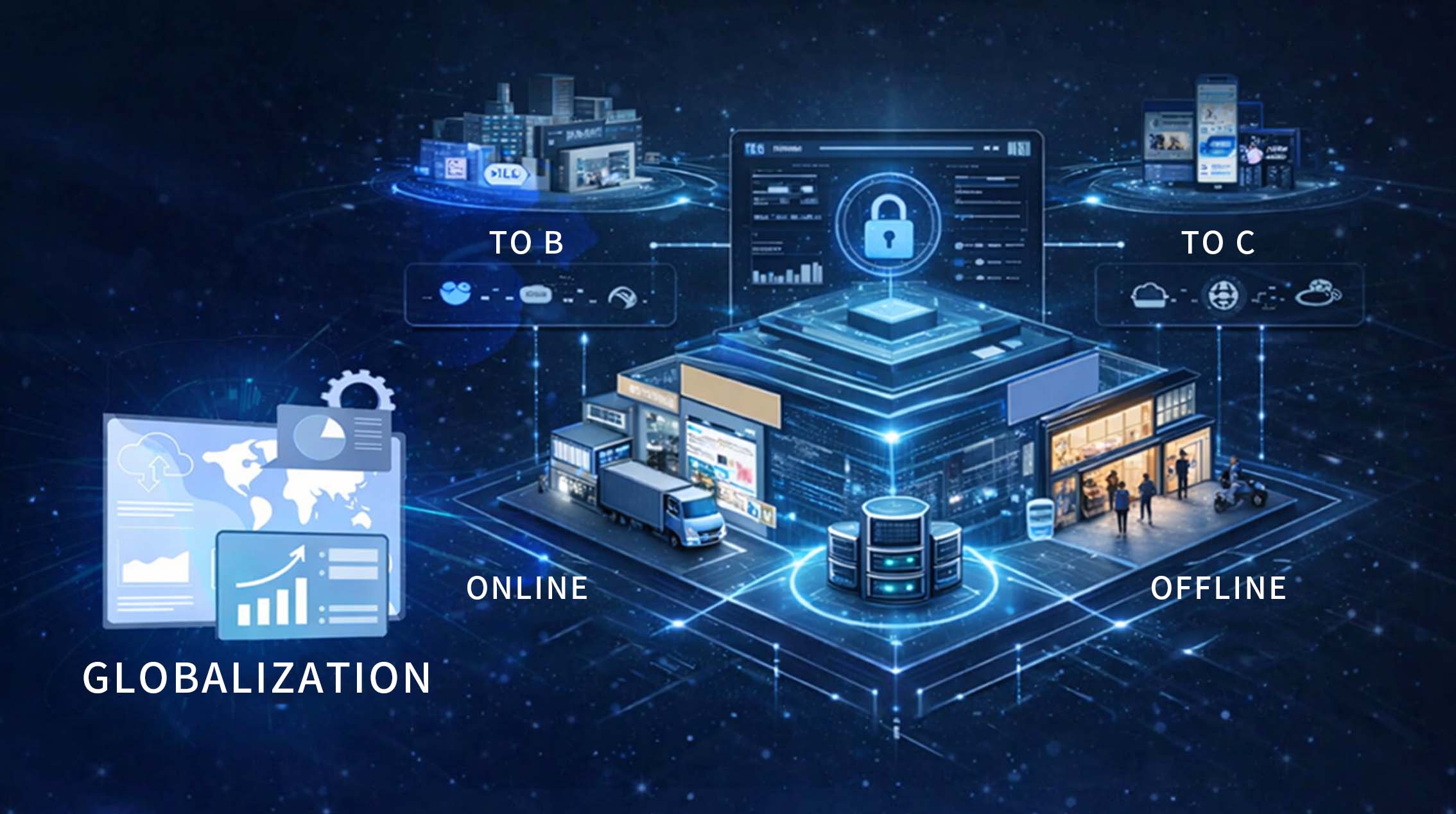
Integrated management of the global layout of domestic and foreign brand companies, as well as diversified business models including B2B, B2C, online and offline operations.
Trends
1. Demand for EDI integration and refined operation from overseas large B-channel supermarkets has increased significantly.
2. Activation of overseas small B private domain channels and efficient collaboration with distributors.
3. Full coverage of domestic and foreign e-commerce, with the vigorous development of independent websites and mini-programs.
4. Vigorously expand the offline direct store system.
5. Upgraded requirements for the global supply chain system and global warehousing system.

Key Challenges
The breadth and depth of global omnichannel sales have increased significantly, leading to a substantial rise in management difficulty.


-

Refined Management for Large B Customers
EDI integration goes beyond purchase order connection, with greater focus on the entire retail operation process of supermarkets.
-

Activation and Direct Reach for Small B Customers
Requires efficient and personalized B2B websites.
-

Full Coverage of Retail Channels
Efficient collaboration between domestic and international e-commerce and offline store systems.

Solutions
Hitpoint boasts extensive experience in global distribution, EDI integration, B2B website development, offline store management, global e-commerce, and other fields, helping clients rapidly expand their sales footprint.
1. In-depth EDI application: Two-way integration and collaboration throughout the entire EDI PO process with major overseas B-channel retailers such as Walmart and Costco, as well as precise analysis of sell-through data during product operation in supermarkets.
2. Customized B2B website development: Using the NS E-Commerce module to build personalized B2B and dealer ordering websites, enabling automated business-finance collaboration with NS without additional interfaces.
3. Domestic and international e-commerce: Integration of orders, delivery notes, after-sales orders and platform statements from domestic and international e-commerce platforms and mini-programs; automated accounts receivable reconciliation and write-off processing; automated expense processing and posting across platforms.
4. Full lifecycle management of offline stores: Store construction management, POS integration, store replenishment and stock transfer, and collaboration between store orders and financial data.
5. Unified control of global sales and purchase price systems across all channels.
6. Development of a global warehousing system, integration of self-owned warehouses, FBA warehouses and third-party warehouses, and transparent management of global inventory.
7. Global supply chain planning and execution: Establishment of a global supply chain center, global procurement and global sales model, integration of personalized replenishment models for different sales channels, full tracking of shipping plans and logistics documents, first-leg freight allocation, and customized landed cost accounting.
8. Global fiscal and tax compliance and automated group financial processing.
Related Cases
-


Shokz
Help Shokz to achieve globalisation/group control and smooth operation of omni-channel integration
Learn More

-

Telford China
Helping Telford China to realise multi-brand, omni-channel trade and efficient operation in China
Learn More
-

BROMPTON
Integration of Brompton's backbone ERP system for global distribution, online/offline omni-channel retailing
Learn More
-

Perdays
Empowering Perdays to achieve group-level global operations and refined, tailored omnichannel management across the brand
Learn More
-

YAT
Empowering YAT to achieve overseas group-level integration of manufacturing and trading, with closed-loop omnichannel sales management
Learn More
Latest News
-

 2026/09/10
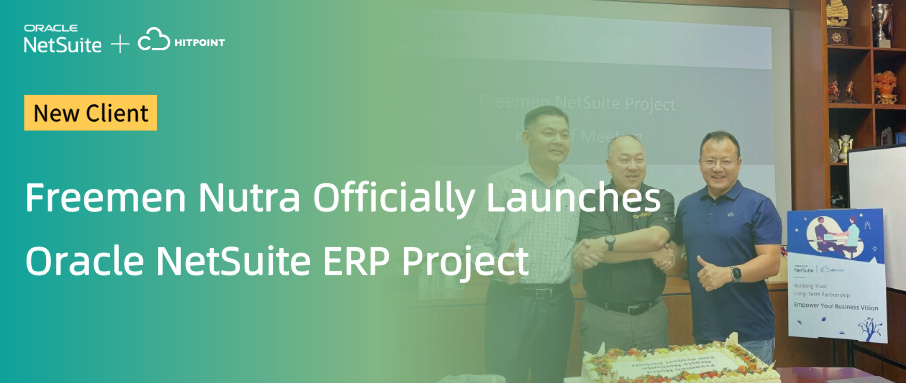
[New Client Update | Freemen Nutra] Oracle NetSuite × Hitpoint Cloud empowers a life sciences company to upgrade its digital management
Learn More
-
 2026/08/27
[Cloud Solutions Spotlight]As Chinese enterprises expand overseas, this marks the ‘year of establishing a foothold’;why has AI-native ERP become a must-have?
Learn More
-
 2026/08/21
[Cloud Solutions Spotlight] Worried about falling into pitfalls when choosing a cloud ERP? Use these 5 criteria to distinguish between ‘true cloud’ and ‘pseudo-cloud’
Learn More